
The Chief Justice of India has weighed in on the Metro clampdown in Delhi, saying "can't use a hammer to kill a fly." The remark comes as the national capital prepares for a major opposition march, with more than 30,000 police and paramilitary personnel deployed across central Delhi.
What Is Happening in Delhi Right Now
The INDIA bloc is set to hold a march to Rashtrapati Bhavan. Opposition leaders are seeking President Droupadi Murmu's intervention over their demand for Chief Election Commissioner Gyanesh Kumar's resignation.
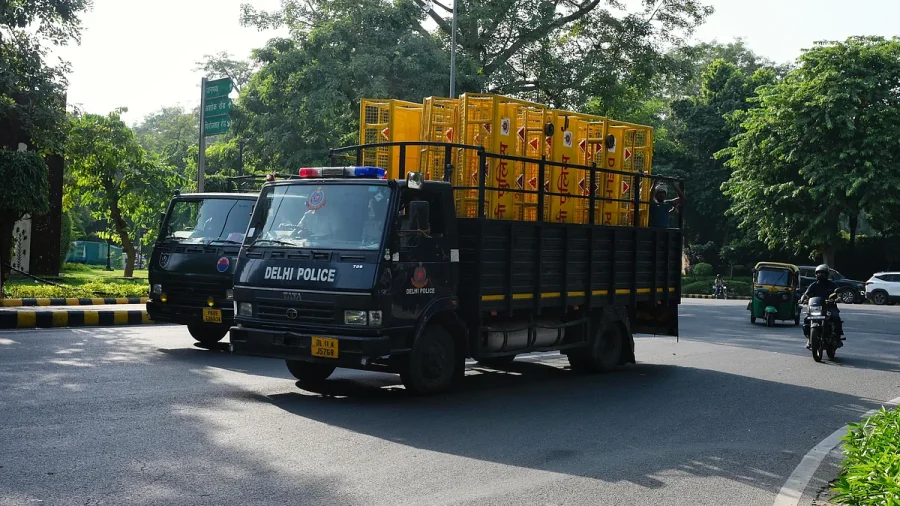
To prepare for the march, security has been strengthened around Parliament, Connaught Place, Jantar Mantar and the routes leading towards Rashtrapati Bhavan. Additional Central Armed Police Forces contingents, pickets and barricades have been positioned at key locations.
Police have advised commuters to follow traffic advisories, as restrictions and diversions could affect movement across the city.
Why the CJI's 'Hammer to Kill a Fly' Remark Matters
The Chief Justice's comment on the Metro clampdown is significant. It suggests that the response to the situation may have been heavier than what the situation called for. The phrase "can't use a hammer to kill a fly" is a simple way of saying that the action taken was too strong for the problem at hand.
This remark adds a judicial voice to the ongoing conversation about how the protest and the Metro restrictions are being handled. It also puts the spotlight on the balance between maintaining order and allowing democratic expression.
The Bigger Picture: Protest, Security and the Demand
The deployment of over 30,000 personnel is one of the largest security arrangements seen in central Delhi in recent times. The focus areas — Parliament, Connaught Place, Jantar Mantar and the route to Rashtrapati Bhavan — are all high-profile locations where the march is expected to pass or gather.
- The INDIA bloc's march is the main event, with leaders seeking the President's intervention.
- The core demand is the resignation of Chief Election Commissioner Gyanesh Kumar.
- Security has been tightened with additional CAPF contingents, pickets and barricades.
- An indefinite sit-in is also planned by student and citizens' organisations, including the Cockroach Janata Party.
- Commuters have been asked to follow traffic advisories as restrictions and diversions could affect movement.
Our Take: The Hammer and the Fly
In our view, the CJI's remark cuts to the heart of the matter. When a protest is planned, the state has a duty to maintain order. But the response must match the threat. Deploying over 30,000 personnel and clamping down on Metro services for a political march raises a fair question: is the hammer too big for the fly?
The opposition has every right to march and seek the President's intervention. The government has every right to ensure security. But when the two collide, the measure of a healthy democracy is whether the response is proportionate. The CJI's words suggest that, at least in the case of the Metro clampdown, it may not have been.
To put it plainly, readers should watch two things: whether the march proceeds peacefully, and whether the security response is scaled to the actual risk. The CJI has given the debate a simple, memorable phrase. Now the question is whether anyone in power is listening.