
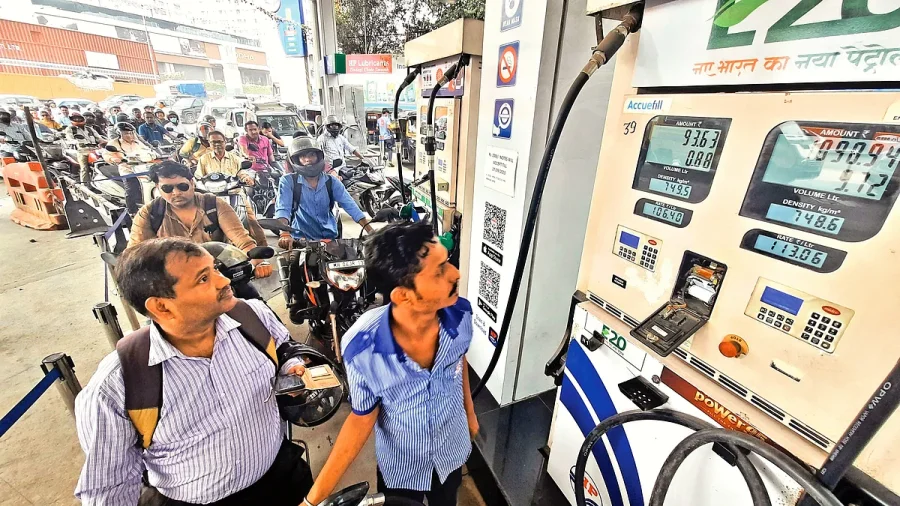

The political fight over India's nationwide E20 fuel rollout intensified on Thursday, with the Congress party stepping up its attack on the government. The Opposition accused the Modi administration of pushing the ethanol-blended petrol for reasons that have little to do with protecting the environment.
Congress general secretary Jairam Ramesh led the charge, saying the government is presenting the accelerated adoption of E20 petrol — a fuel that blends 20% ethanol with petrol — as a major step toward cleaner energy and reduced dependence on imported oil. But he argued that the real motivations behind the move are clearly not environmental.
Congress Demands Full Ecological Assessment of E20 Fuel Policy
According to The New Indian Express, Ramesh said a genuinely sustainable fuel policy must look beyond just emissions. He insisted that the government needs to examine the complete ecological footprint of the fuel it is promoting, not just the tailpipe emissions.
The Congress leader pointed out that ethanol production from sugarcane, rice, and maize places heavy pressure on India's water resources. He urged the Centre to adopt more sustainable feedstocks for ethanol production instead of relying on crops that strain the country's natural resources.
Water Resources, Agriculture, and Food Security at Risk
The party's criticism goes beyond simple fuel chemistry. Ramesh highlighted that a broader assessment of the E20 rollout must consider its impact on India's water resources, agricultural patterns, and food security. The concern is that diverting food crops like sugarcane, rice, and maize toward fuel production could create ripple effects across the country's farming sector.
According to Daily Excelsior, the Congress has framed this as a question of whether the policy truly serves the environment or simply benefits certain interest groups. The party's stance suggests that a fuel policy claiming to be green must prove its credentials across the entire production chain.
"A genuinely 'green' fuel policy must look beyond emissions and examine the complete ecological footprint of the fuel being promoted." — Congress via PTI
Congress Questions Who Really Benefits from Ethanol Blending
The attack also carries a political edge. The Congress has suggested that the E20 rollout favours ethanol producers over the interests of ordinary citizens. According to The Hindu, the party has argued that the policy could hurt the middle class while benefiting a select group of producers.
This line of criticism frames the E20 push not as an environmental victory but as a policy choice that picks winners and losers. The Congress is essentially asking: if the goal is truly environmental, why does the policy seem to serve commercial interests first?
According to The Economic Times, Ramesh's remarks signal that the Congress intends to keep pressing the government on this issue. The party is positioning itself as the defender of a more holistic approach to fuel policy — one that weighs environmental costs beyond just carbon emissions.
Our Take: The Environmental Argument Needs More Than Emissions Math
To put it plainly, the Congress has raised a legitimate point that deserves serious attention. For too long, the conversation around cleaner fuels has focused almost entirely on reducing emissions at the tailpipe. But a fuel's environmental cost does not end there.
If producing ethanol requires vast amounts of water and diverts food crops away from the dinner table, then the "green" label becomes misleading. The Congress is right to demand that the government show its full homework — not just the emissions savings, but the water usage, the agricultural impact, and the food security trade-offs.
That said, this is also politics. The Congress is using a genuine policy concern to score points against the Modi government. That does not make the underlying questions wrong, but it does mean voters should separate the valid criticism from the political theatre.
The real test for the government is simple: can it prove that the E20 rollout is good for the environment in the full sense of the word? If the answer requires ignoring water stress and food security, then the Congress's attack will keep landing.