
Congress leader Rahul Gandhi said the struggle of tribal students in Maharashtra goes far beyond demands for education, employment, accommodation, and food — it is a fight for their very existence and Adivasi identity.
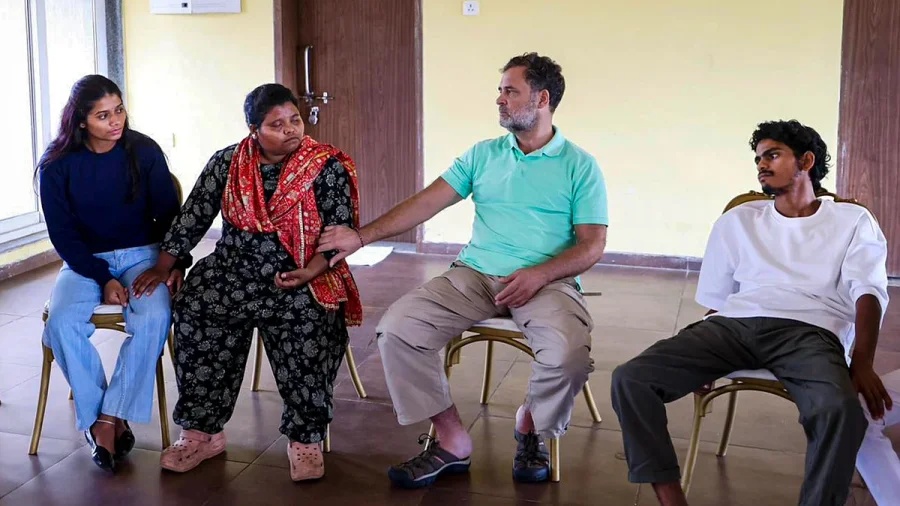
The Leader of the Opposition in the Lok Sabha made these remarks while sharing a video on X of his interaction with tribal students during his visit to Nashik on Wednesday.
Rahul Gandhi on tribal students' fight against RSS-BJP
In a Hindi post accompanying the video, Gandhi wrote: "'We are Adivasis; RSS-BJP want to turn us into Vanvasis.' The fight of tribal students from Nashik and Maharashtra is not just for education, employment, hostels, and food — it's also for their existence and Adivasi identity."
The statement captures a central grievance among the students — that the ruling dispensation is attempting to strip them of their recognized tribal status and reduce them to a different category.
Students standing firm against Maharashtra government
Gandhi praised the students for their resolve. He said they stood firm against the Maharashtra government, raised their demands, and secured what they were fighting for.
The video and post highlight a broader political clash over tribal rights in the state, with Gandhi framing the issue as an existential one rather than a matter of simple welfare schemes.
"We are Adivasis; RSS-BJP want to turn us into Vanvasis." — Rahul Gandhi, via post on X
Our Take: Why this framing matters
To put it plainly, this is more than a routine political statement. By shifting the conversation from hostels and food to identity and existence, Rahul Gandhi is drawing a sharp line between the Congress's position and that of the central and state governments led by the BJP and its allies.
The use of the terms "Adivasi" and "Vanvasi" is deliberate. Adivasi is the term tribal communities use for themselves, rooted in recognition of their original inhabitants' status. Vanvasi, by contrast, is a term associated with the RSS-BJP ideological stream, which some tribal groups reject as an attempt to erase their distinct identity.
For readers, the key takeaway is that this dispute is not just about policy details. It is about how the state recognizes — or fails to recognize — the cultural and historical claims of tribal communities. When a national opposition leader amplifies this specific grievance, it signals that tribal rights will remain a live political battleground in the run-up to state and national elections.
The students' success in securing their demands, as Gandhi noted, also shows that sustained protest can yield results — even against a state government with significant resources. Whether that momentum translates into lasting political change remains to be seen.