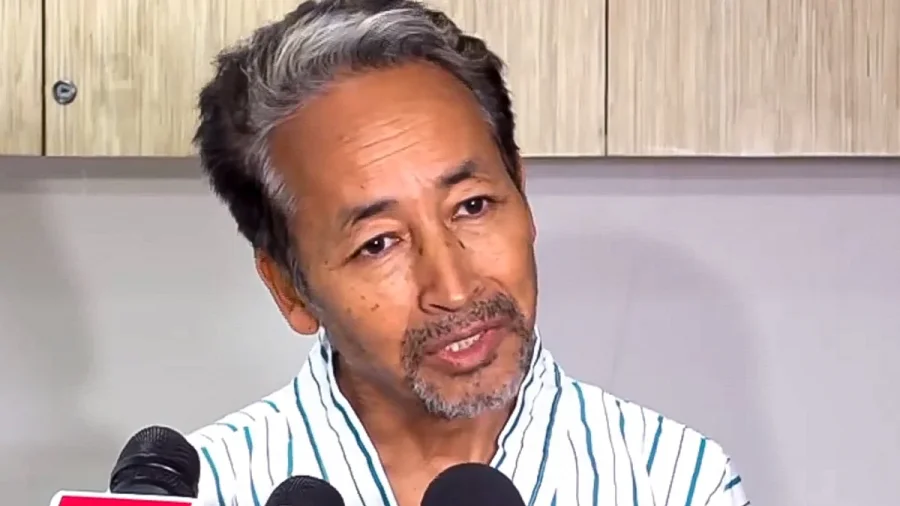

Climate activist Sonam Wangchuk has described the situation in Delhi as an "undeclared emergency." He said this after opposition leaders, student activists, lawyers and journalists were detained in the city. The detentions took place amid restrictions ahead of a protest against Chief Election Commissioner Gyanesh Kumar.
Wangchuk also issued a clear warning. He said he would consider launching a peaceful protest if those detained are not released within 24 hours. That protest, he said, could take the form of a hunger strike or a march in Leh or Delhi.
Wangchuk's Warning Over Delhi Detentions
Wangchuk shared his message in a video posted on X. In that video, he said he had learnt that students were among those detained. He made it clear that the detentions were the reason for his warning.
His demand is simple. He wants the government to end the arrests. He also wants the issues to be resolved through dialogue instead of detention.
What Wangchuk Is Asking For
The activist's position rests on two main points:
- Release all those detained in Delhi within 24 hours
- Resolve the issues through dialogue, not arrests
If the detainees are not released in that window, Wangchuk said he would move ahead with a peaceful protest. He named a hunger strike or a march as the possible forms of that protest. He said this could happen in Leh or in Delhi.
Our Take: Why This Warning Matters
To put it plainly, this is a serious moment. A well-known activist is publicly calling the situation in the capital an "undeclared emergency." That is not a small statement. It signals that he believes normal democratic space is being squeezed.
In our view, the 24-hour deadline is the key part of this story. It turns a statement into a test. If the detainees are released, the tension may cool down. If they are not, Wangchuk has already told everyone what he plans to do next.
What should readers take from this? First, the detentions are not limited to one group. Opposition leaders, students, lawyers and journalists were all held. That spread matters, because it touches many parts of public life. Second, Wangchuk is choosing peaceful methods — a hunger strike or a march — not violence. That choice deserves attention.
The government now faces a direct question. Will it release the detainees and open a dialogue, or will it let the standoff grow? Wangchuk has made his side clear. The next move is not in his hands.
For ordinary readers, this story is about more than one activist. It is about whether peaceful protest and dialogue still have room in the country. That is why this warning should not be ignored.