

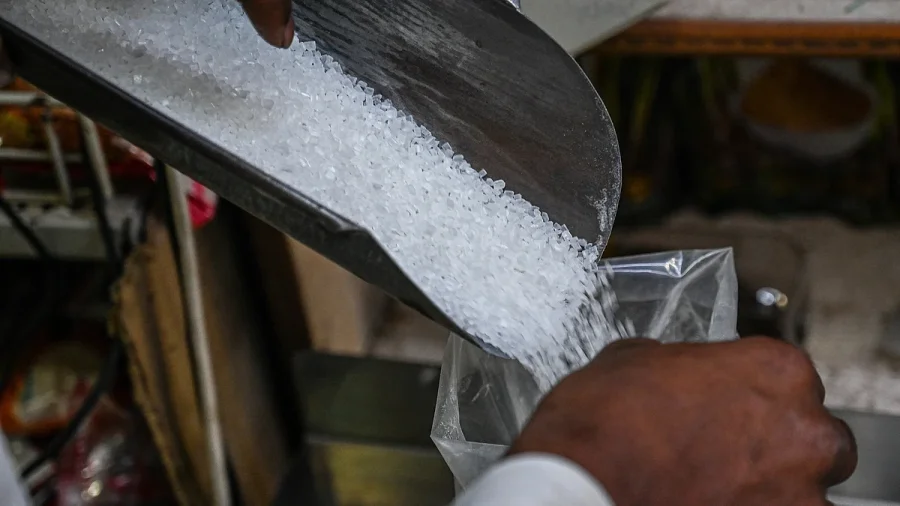

Retail sugar prices in Kolkata have climbed to Rs 70 a kg, rising by Rs 20 over the past month as demand builds ahead of the festive season, traders said on Friday.
The market has witnessed a particularly sharp increase over the past four to five days, with prices jumping by around 10 per cent. Sugar-based products such as jaggery, batasa and nakuldana have also become more expensive.
Why Sugar Prices Are Rising in Kolkata
A neighbourhood grocery shop owner said loose sugar, which was selling for Rs 65 a kg just three days ago, could no longer be offered below Rs 70. This shows how quickly the price movement has happened at the retail level.
According to National Herald, traders blame tight supplies and ethanol diversion as the Centre allows raw sugar imports and caps stocks held by bulk consumers.
Confederation of West Bengal Trade Associations president Sushil Poddar said wholesale prices had already reached Rs 65 a kg and alleged that sugar mills were not being adequately regulated.
Ethanol Diversion and Supply Concerns
Poddar identified the diversion of sugarcane towards ethanol production as one of the key reasons behind the shortage. When sugarcane is used to make ethanol instead of sugar, the supply of sugar in the market drops, which pushes prices up.
The festive season typically drives up demand for sugar and sugar-based sweets. With demand rising and supply tightening, the price pressure has become visible in Kolkata markets.
"Traders blame tight supplies and ethanol diversion as the Centre allows raw sugar imports and caps stocks held by bulk consumers." — National Herald
What This Means for Consumers
For households in Kolkata, the price increase means everyday essentials like sugar and jaggery will cost more during the festive period. Small grocery shops are already feeling the pressure, as they cannot offer loose sugar below the Rs 70 mark.
The rise also affects sweet shops and small businesses that depend on sugar as a raw material. Products like batasa and nakuldana, which are popular during festivals, have already become more expensive.
Our Take: Regulation and Supply Need Attention
To put it plainly, this price surge is not just a seasonal blip. The allegation from the traders' body that sugar mills are not being adequately regulated deserves serious attention.
When a staple commodity like sugar jumps by Rs 20 in a month, it hits ordinary households the hardest. The diversion of sugarcane towards ethanol production may be good for fuel blending targets, but it should not come at the cost of food inflation.
The government's move to allow raw sugar imports and cap stocks held by bulk consumers shows awareness of the problem. But the real test will be whether these measures bring prices down before the festive season peaks. Consumers in Kolkata will be watching closely.