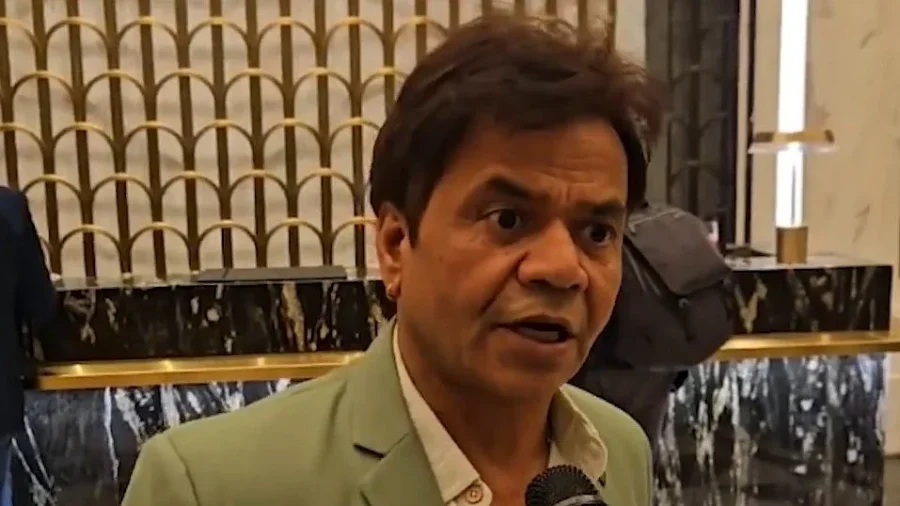

The Supreme Court has given actor Rajpal Yadav one last chance to settle his long-running cheque-bounce cases. On Tuesday, a bench headed by Chief Justice Surya Kant, along with Justices Joymalya Bagchi and V Mohana, told Yadav he has a final two-week window to come up with a concrete proposal to clear his outstanding dues to a private firm.
The court also directed him to deposit Rs 2 crore with the court registry. His exemption from surrendering has been extended until 5 October, when the matter will be heard again.
What the Rajpal Yadav Cheque-Bounce Case Is About
The case involves multiple cheque-bounce complaints filed by M/s Murali Projects Pvt Ltd. According to the complainant, Yadav received Rs 5 crore in financial assistance in 2010 for a film. As part of a settlement, he issued seven cheques of Rs 1.05 crore each in 2013. Those cheques were allegedly dishonoured.
The complainant also says an agreement reached in 2012 set out the terms of the settlement. The bounced cheques became the basis of the complaints that have now reached the Supreme Court.
Why the Court Is Pressing for a Settlement
The bench's message is simple: this is the last opportunity for Yadav to present a workable plan to pay what he owes. The two-week deadline and the Rs 2 crore deposit order show the court wants action, not more delays.
- The court wants a concrete proposal, not a vague promise to pay later.
- Rs 2 crore must be deposited with the court registry.
- Yadav does not have to surrender until 5 October.
- The matter will be heard again on 5 October.
Our Take: A Final Warning, Not a Routine Extension
In our view, the wording of this order matters as much as the numbers. Courts usually grant extensions in cheque-bounce matters, but calling this a "final" two-week chance signals that the bench's patience is running out. The Rs 2 crore deposit is not just paperwork — it is a test of good faith.
To put it plainly, Yadav now has two weeks to do what years of litigation have not produced: a clear, funded plan to settle the dues. If he fails to deliver, the next hearing on 5 October could go very differently for him. For readers following this case, the takeaway is straightforward — the Supreme Court has drawn a hard line, and the clock is now running.