
Summary
President Donald Trump has once again voiced strong criticism against NATO, the world’s largest military alliance. During a recent meeting, the President claimed that the group failed to support the United States during a time of conflict with Iran. Following these comments, the head of NATO described the discussions as very direct and honest, signaling a clear disagreement between the US and its allies. This tension raises new questions about the future of international cooperation and how much the US will rely on its partners in the coming years.
Main Impact
The primary impact of this development is a growing rift between the United States and its European partners. For decades, NATO has been the backbone of Western security, based on the idea that an attack on one member is an attack on all. However, President Trump’s latest remarks suggest that the US may no longer see the alliance as a reliable partner in global conflicts outside of Europe. This shift could lead to a change in how military resources are shared and how countries plan for future security threats.
Key Details
What Happened
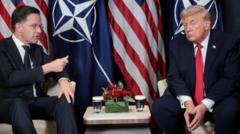
The disagreement came to light after a high-level meeting where the President spoke about the lack of support the US received during tensions with Iran. He specifically noted that NATO "wasn't there when we needed them," referring to a period of military action or heightened conflict. In response, the NATO Secretary General did not hide the fact that the meeting was difficult. By calling the talk "very frank," the alliance chief confirmed that both sides held very different views on what NATO’s role should be during Middle Eastern conflicts.
Important Numbers and Facts
The United States currently provides the largest share of funding and military power to NATO. For years, the US has pushed other member countries to spend at least 2% of their economic output on defense. While some countries have increased their spending, many still fall short of this goal. The President’s frustration often stems from this perceived imbalance, where the US pays more but feels it receives less help when it faces specific challenges like those involving Iran. Currently, NATO consists of 32 member states, most of which are located in Europe.
Background and Context
NATO was created after World War II to prevent another major war in Europe. Its main job has always been to protect European borders from outside threats. Over time, the United States has asked NATO to help with problems in other parts of the world, such as the Middle East and Central Asia. While NATO did help in places like Afghanistan, many European members are hesitant to get involved in conflicts that do not directly threaten Europe. This difference in goals has caused repeated arguments between Washington and other capitals like Paris and Berlin.
Public or Industry Reaction
Political experts and world leaders have reacted with concern to the latest comments. Some military analysts believe that criticizing the alliance publicly makes it look weak to its enemies. European leaders have generally remained quiet but have emphasized that NATO’s primary focus must remain on the security of the North Atlantic region. Within the US, some lawmakers agree with the President that allies should do more, while others argue that NATO is too important to risk damaging with harsh words. The general feeling among diplomats is that the relationship is under more pressure now than it has been in decades.
What This Means Going Forward
Looking ahead, we may see the United States take a more independent path in its foreign policy. If the President feels that NATO will not help during non-European conflicts, the US might stop asking for their input or support. This could lead to the US moving its troops and equipment to other parts of the world where it feels more supported. For NATO, the challenge will be to prove its value to the US while also keeping its European members happy. The next few summits will likely focus on how to redefine NATO's mission to include modern threats that happen outside of Europe’s borders.
Final Take
The relationship between the US and NATO is at a crossroads. While the alliance has kept the peace for a long time, the President’s recent comments show that the US expects more active help in return for its leadership. Whether the alliance can change to meet these demands or if it will continue to drift apart remains the biggest question in global politics today. Clear communication and shared goals will be necessary to fix the current lack of trust.
Frequently Asked Questions
Why is the President angry with NATO?
The President believes that NATO members do not spend enough money on their own defense and failed to provide military support to the US during conflicts with Iran.
What does a "very frank" meeting mean in politics?
In diplomatic terms, a "very frank" meeting means that the leaders had a serious disagreement and spoke very sharply to each other rather than just being polite.
Is the US leaving NATO?
There has been no official move to leave the alliance, but the repeated criticism suggests that the US is rethinking how much it wants to participate in the group's current structure.