
Summary
Harish Rana, a man who spent 13 years in a coma, passed away at AIIMS Delhi on March 24, 2026. He was the first person in India to be legally granted the right to passive euthanasia following a landmark Supreme Court decision. His death marks a major shift in how the Indian legal and medical systems handle end-of-life care for patients with no hope of recovery. This case highlights the balance between medical technology and the human right to die with dignity.
Main Impact
The passing of Harish Rana is a historic moment for Indian law and medical ethics. For over a decade, Rana was kept alive by machines and feeding tubes despite having no chance of waking up. By allowing the withdrawal of life support, the Supreme Court has set a clear path for other families facing similar heart-breaking situations. This case moves India toward a more compassionate approach to medical care, where the quality of life is considered just as important as the length of life.
Key Details
What Happened
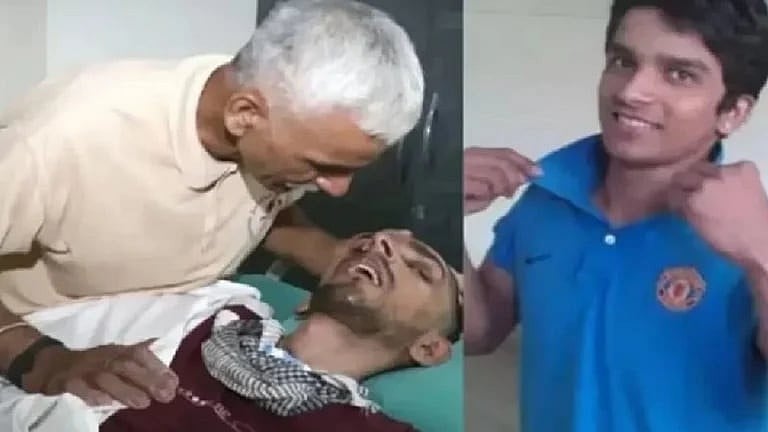
In 2013, Harish Rana suffered a life-changing accident when he fell from a fourth-floor balcony. The fall caused severe injuries that left him in a persistent vegetative state. For the next 13 years, he remained in a coma, unable to move, speak, or breathe without help. His body was kept functioning through artificial nutrition delivered by a tube and oxygen support. On March 11, 2026, the Supreme Court ruled that continuing this treatment only served to prolong his biological existence without any hope of improvement. Following this order, he was moved to a specialized unit at AIIMS where doctors carefully began the process of withdrawing life support.
Important Numbers and Facts
Harish Rana lived in a coma for more than 13 years before his passing. The Supreme Court delivered its final judgment on March 11, 2026, and he died at 4:10 p.m. on March 24, 2026. During his final days, he was cared for by a medical team at the Palliative Oncology Unit of the Dr. B.R. Ambedkar Institute Rotary Cancer Hospital. In a final act of kindness, his family chose to donate his heart valves and corneas, which will help other patients in need of transplants.
Background and Context
Passive euthanasia is the act of stopping or withholding medical treatment that is keeping a person alive. This is different from active euthanasia, where a doctor takes a direct action to end a life. In India, the legal journey for this right began years ago. In 2018, a famous court ruling stated that the right to live with dignity, protected by the Constitution, also includes the right to die with dignity. In 2023, the rules were made simpler so that families would not have to wait years for a decision. The law now requires expert medical boards to review each case to ensure that stopping treatment is the most humane choice for the patient.
Public or Industry Reaction
The reaction to Harish Rana’s case has been one of deep respect for his family. His parents, Ashok and Nirmala Rana, were praised by the court for their 13 years of constant care and love. His father explained that the decision to seek passive euthanasia was not about giving up, but about giving his son peace after years of suffering. Medical experts and activists have also welcomed the clarity provided by the Supreme Court. They believe this case will help doctors feel more confident when discussing end-of-life options with families, ensuring that patients are not kept in a state of suffering against their or their family's wishes.
What This Means Going Forward
This case serves as a guide for future medical and legal decisions in India. The Supreme Court has now asked the government to create formal laws to manage passive euthanasia. They have also ordered that every district must have a group of registered doctors ready to form medical boards. These boards will be responsible for reviewing cases quickly and making sure everything is done according to the law. This system aims to make the process transparent and fair, preventing any misuse while protecting the rights of the terminally ill.
Final Take
Harish Rana’s story is a reminder of the difficult choices that come with modern medicine. While technology can keep a body alive for years, it cannot always restore a person's life. His passing marks the end of a long struggle for his family and the beginning of a new era for patient rights in India. It shows that true compassion sometimes means knowing when to let go, ensuring that a person's final moments are defined by peace and dignity rather than machines.
Frequently Asked Questions
What is the difference between active and passive euthanasia?
Active euthanasia involves using a substance to end a patient's life directly. Passive euthanasia means stopping medical treatments, like feeding tubes or ventilators, that are keeping a person alive when there is no hope of recovery.
Is passive euthanasia legal for everyone in India?
It is legal only under very strict conditions. A patient must be in a permanent vegetative state or have a terminal illness with no hope of recovery. The decision must be reviewed and approved by specialized medical boards as per the Supreme Court's guidelines.
Why did Harish Rana’s case take 13 years?
The legal process for passive euthanasia was very complex and took many years to define. Rana’s family cared for him at home for over a decade before the legal framework was clear enough for the Supreme Court to make this historic ruling in 2026.