
Summary
Recent reports and witness accounts indicate that Iran is using young children to fill security and military roles during times of conflict. A tragic incident in Tehran recently brought this issue to light after an 11-year-old boy was killed in an air strike. The child was reportedly manning a security checkpoint when the attack occurred. This development has raised serious concerns among human rights groups regarding the safety of minors and the violation of international laws that protect children from being used in war.
Main Impact
The primary impact of this situation is the immediate danger posed to children who are placed in high-risk zones. By using minors for security tasks, the Iranian government is exposing them to military targets and active combat situations. This practice not only leads to the loss of young lives but also draws heavy criticism from the international community. It signals a shift where traditional boundaries between civilian children and military personnel are becoming blurred, making it harder to protect vulnerable populations during air strikes and ground battles.
Key Details
What Happened
According to witnesses on the ground, an 11-year-old boy was stationed at a checkpoint in the capital city of Tehran. His role involved monitoring traffic and checking individuals passing through the area, a task usually handled by adult security forces or police. During his shift, an air strike hit the location. The boy did not survive the blast. Local reports suggest that he was part of a larger effort to use youth volunteers to support national security during the ongoing unrest and military tension.
Important Numbers and Facts
The victim was only 11 years old, which is far below the legal age for military service in most countries. International law, specifically the United Nations Convention on the Rights of the Child, strictly forbids the recruitment and use of children under the age of 15 in hostilities. Furthermore, many international organizations consider the use of anyone under 18 in military roles to be a violation of human rights. While the exact number of children currently serving in these roles is not public, human rights monitors suggest that hundreds of minors may be involved in various security capacities across the country.
Background and Context
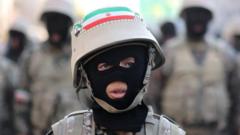
The use of children in military roles in Iran is not a new phenomenon. During the Iran-Iraq War in the 1980s, thousands of young boys were recruited into the Basij, a volunteer paramilitary force. These children were often sent to the front lines to perform dangerous tasks. In recent years, the Basij has continued to recruit teenagers for ideological training and local security duties. However, the latest reports of an 11-year-old manning a checkpoint during an active air strike suggest that children are being placed in much more direct danger than previously thought. This practice is often driven by a need for more manpower and a desire to show widespread public support for the government's security measures.
Public or Industry Reaction
Human rights organizations have reacted with shock and anger to the news of the boy's death. Groups like Amnesty International have long called for Iran to stop recruiting minors into its security forces. Activists argue that children cannot give informed consent to participate in dangerous military activities. On social media, many citizens have expressed grief and frustration, questioning why a child was allowed to be at a military target during a time of war. Meanwhile, international leaders are being urged to put more pressure on the Iranian government to follow global standards for child protection.
What This Means Going Forward
Moving forward, the death of this child may lead to stricter international sanctions or legal challenges against Iranian officials. There is a high risk that if this practice continues, more children will be caught in the crossfire of air strikes and urban combat. International monitors will likely increase their efforts to track the recruitment of minors in the region. For the families living in these areas, the fear of losing their children to state-mandated security roles is growing. The situation highlights a desperate need for stronger enforcement of international treaties that ban the use of child soldiers in any capacity.
Final Take
The loss of an 11-year-old life at a security checkpoint is a stark reminder of the costs of war. When children are used as tools for national security, they lose their right to safety and a normal childhood. The international community must remain vocal and active in demanding that all nations, including Iran, keep children away from the battlefield. Protecting the youth is not just a legal obligation but a moral one that defines the humanity of a society.
Frequently Asked Questions
Is it legal to use children in security roles during war?
No, international law forbids the recruitment and use of children under the age of 15 in any military capacity. Many international agreements also state that no one under 18 should take part in direct hostilities.
What is the Basij militia?
The Basij is a large volunteer paramilitary force in Iran. It is known for recruiting young people and teenagers to support the government through security work, social programs, and ideological activities.
What can the international community do to stop this?
Global organizations can investigate these incidents, report them as war crimes, and apply diplomatic pressure or sanctions to encourage governments to follow child protection laws.