
Summary
The ongoing military conflict involving the United States, Israel, and Iran has led to a sharp increase in civilian casualties. As the fighting moves into urban areas, ordinary people who have no part in the war are paying the highest price. Recent reports highlight the tragic deaths of a local pharmacist and a popular lifestyle blogger, illustrating how the violence is destroying the lives of regular citizens. This growing toll is causing international concern about the humanitarian crisis unfolding across the region.
Main Impact
The primary impact of this war is the rapid breakdown of safety for millions of people living in Iranian cities. While military leaders focus on strategic targets, the reality on the ground is much different. Residential neighborhoods are being hit, leading to the loss of essential workers and community figures. This loss of life is not just a statistic; it represents the disappearance of the people who keep society running, such as healthcare providers and those who document daily life for the world to see.
Key Details
What Happened
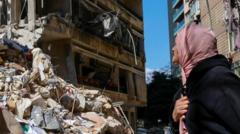
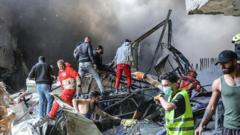
In recent days, several air strikes and ground operations have occurred in densely populated areas. Among the victims was a well-known pharmacist who had refused to leave his shop, believing that his community needed medicine more than ever. Another victim was a lifestyle blogger who had gained a large following by sharing her experiences of living through the tension and her deep love for her home. Both individuals were killed when their neighborhoods became active battle zones.
Important Numbers and Facts
Local health officials report that civilian deaths have increased by nearly 40% over the last two weeks. In major cities, over 200 medical facilities have reported damage or a total lack of supplies. International aid groups estimate that hundreds of thousands of people are now displaced, moving from one city to another to find safety that often does not exist. The average age of those caught in the crossfire continues to drop, showing that families are the ones suffering the most.
Background and Context
This conflict did not start overnight. Tensions between the US, Israel, and Iran have been building for years over political disagreements and security concerns. However, the shift from political threats to full-scale military action has changed everything for the people living there. In the past, wars were often fought in remote areas, but modern warfare frequently happens in the middle of cities. This makes it almost impossible to avoid hitting homes, schools, and businesses, leading to the "alarming" costs mentioned by human rights observers.
Public or Industry Reaction
The international community has reacted with a mix of anger and sadness. Human rights organizations are calling for an immediate pause in the fighting to allow civilians to escape and for food and medicine to enter the country. Many people on social media have started sharing the stories of the pharmacist and the blogger to remind the world that these are real people, not just numbers on a news screen. There is a growing demand for both sides to respect international laws that protect non-combatants during wartime.
What This Means Going Forward
The future looks difficult for the region as the war shows no signs of stopping. Even if the fighting ended today, the loss of professionals like pharmacists and teachers will make it hard for society to recover. The psychological impact on the survivors will last for generations. There is also a risk that the continued death of civilians will lead to more anger and instability, making a peaceful solution even harder to reach in the coming months.
Final Take
The stories of the pharmacist and the blogger serve as a grim reminder that war always costs more than just money or equipment. When the dust settles, the true measure of this conflict will be the empty chairs at family dinner tables and the loss of the people who made their communities whole. Protecting civilian life must become the top priority if there is to be any hope for a stable future in the region.
Frequently Asked Questions
Why are civilian deaths increasing so quickly?
Deaths are rising because the fighting is taking place in crowded cities where people live and work. When bombs fall in these areas, it is very hard to avoid hitting homes and public buildings.
Who were the pharmacist and the blogger mentioned in the news?
They were ordinary citizens who became symbols of the war's human cost. The pharmacist stayed to provide medicine to his neighbors, and the blogger used her platform to talk about her daily life before they were both killed in the violence.
What is being done to help the people in Iran?
International aid groups are trying to send food and medical supplies, but the ongoing fighting makes it very dangerous for them to reach the people who need help the most. Many countries are also calling for a ceasefire.