
Summary
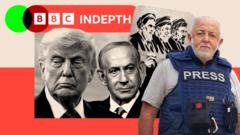
The military conflict in Iran has now reached its one-month mark, and the results are not what the White House expected. President Donald Trump has been leading this effort based on his personal intuition rather than traditional military strategy. According to Jeremy Bowen, the BBC’s international editor, this "gut-instinct" approach is failing to produce a clear victory. As the fighting continues, many are questioning if a war can be won without a formal and detailed plan.
Main Impact
The biggest impact of this strategy is the growing confusion within the military and among international allies. By following his own feelings, the president has bypassed the usual channels of advice from generals and diplomats. This has created a situation where the United States is acting unpredictably. Instead of a swift resolution, the conflict has turned into a slow and difficult struggle that lacks a clear goal or an end date.
Key Details
What Happened
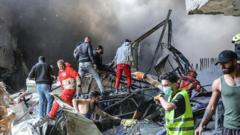
One month ago, the United States entered into a direct conflict with Iran. From the start, President Trump made it clear that he would handle the situation his own way. He often ignored the long-term plans prepared by the Pentagon. Instead, he made quick decisions based on how he viewed the situation at the moment. While this style worked for him in business and politics, it is proving to be much more dangerous in a war zone. The Iranian military has shown more resistance than the administration predicted, and the lack of a structured U.S. plan has allowed the situation to stall.
Important Numbers and Facts
The conflict has now lasted 30 days with no sign of stopping. Reports suggest that the cost of the military operations is rising daily, reaching billions of dollars. Despite the heavy use of technology and air power, the U.S. has not gained the control it hoped for in the first few weeks. Furthermore, diplomatic support from traditional partners in Europe and the Middle East remains low. Many of these countries are hesitant to join a fight that seems to change direction based on the president's daily mood.
Background and Context
To understand why this matters, it is important to look at how wars are usually fought. Most leaders rely on a "chain of command." This means they listen to experts who have spent their lives studying war and foreign policy. Iran is a large country with a complex military and a difficult geography. It is not a place where simple solutions usually work. For decades, the relationship between the U.S. and Iran has been tense, but it rarely turned into an open war. By choosing to fight based on instinct, Trump has moved away from years of careful planning and caution.
Public or Industry Reaction
Military experts and former officials have expressed deep concern over the current path. Many argue that "gut feelings" are not a substitute for intelligence reports and logistics. In the United States, public opinion is becoming more divided as the weeks pass without a clear win. Some supporters still trust the president’s unique style, but critics say he is playing a dangerous game with the lives of soldiers. Internationally, leaders are worried that this unpredictable behavior could lead to a much larger war that involves more countries in the region.
What This Means Going Forward
The next few weeks will be critical for the administration. If the current approach continues to fail, the president may be forced to choose between two difficult options. He could listen to his generals and adopt a more traditional military plan, or he could pull back and look for a way to end the fighting through talks. However, changing strategy now might be seen as a sign of weakness. There is also the risk that Iran will take advantage of the lack of a clear U.S. plan to launch its own counter-attacks, which could make the situation even more violent.
Final Take
Leading a country through a war requires more than just confidence and quick decisions. It requires a deep understanding of the enemy and a solid plan that everyone follows. After one month, it is clear that relying on instinct alone is not enough to handle the complexities of a conflict in Iran. Without a major change in how decisions are made, the United States risks staying in a difficult fight for a very long time without achieving its goals.
Frequently Asked Questions
Why is Trump using instinct instead of a plan?
The president has always trusted his personal judgment over the advice of experts. He believes that his ability to read people and situations is his greatest strength, even in military matters.
How long has the conflict in Iran been going on?
The current conflict has been active for exactly one month. While it was expected to be a short operation, it has now become a prolonged struggle with no clear end in sight.
What do military experts think of this approach?
Most military experts are worried. They believe that war is too complex for "gut feelings" and that the lack of a structured strategy is putting soldiers and national security at risk.