
Summary
Israel has significantly increased its military actions across Lebanon, moving beyond its usual targets. Recent reports show that the Israeli military is now striking regions that are not under the control of Hezbollah. This expansion comes as Israel officially states its goal to take over large parts of southern Lebanon. The move marks a major shift in the conflict, raising fears of a long-term occupation and a wider humanitarian crisis.
Main Impact
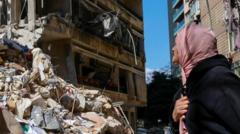
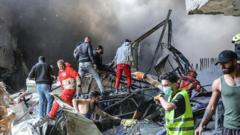
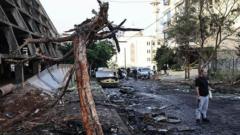
The most immediate impact of this escalation is the danger to civilians in areas previously thought to be safe. By hitting locations outside of Hezbollah’s traditional strongholds, the Israeli military is widening the war zone. This strategy suggests that the goal is no longer just to weaken a specific group, but to clear and control physical territory. For the people of Lebanon, this means that nowhere in the southern half of the country is truly safe from air strikes or ground movements.
This change in tactics also puts a massive strain on the Lebanese government and international aid groups. As the fighting moves into new areas, thousands more people are forced to flee their homes. Many of these people had already moved once to escape earlier fighting, and now they have nowhere left to go. The destruction of roads and buildings in these "neutral" areas makes it even harder to deliver food, water, and medical supplies to those in need.
Key Details
What Happened
Over the last few days, Israeli jets and artillery have hit several towns and villages that do not have a known Hezbollah presence. These areas include farming communities and small residential hubs that were not part of the initial conflict zones. At the same time, the Israeli government has made it clear that they intend to establish a "security zone" by taking control of land in the south. This involves moving ground troops deeper into Lebanese territory than they have gone in recent years.
Important Numbers and Facts
Military experts note that the frequency of air strikes has doubled in the past week. Reports indicate that over 20 new locations were targeted for the first time since the current tensions began. While the exact number of troops involved is not public, the scale of the movement suggests a multi-division operation. On the humanitarian side, local officials estimate that over 100,000 people have been displaced in just the last few days due to the widening scope of the attacks. The financial cost of the damage to infrastructure in these new areas is already reaching hundreds of millions of dollars.
Background and Context
To understand why this is happening, it is important to look at the history of the border between Israel and Lebanon. For a long time, the two sides have fought over a line called the Blue Line. Israel says it needs to move into Lebanon to stop rockets from being fired at its northern cities. They argue that a "buffer zone" is the only way to keep their citizens safe. However, Lebanon sees this as an illegal invasion of its land. In the past, similar attempts to control southern Lebanon have led to long wars that lasted for many years. This current move is seen by many as a return to those older, more violent strategies.
Public or Industry Reaction
The international community has reacted with deep concern. The United Nations has called for an immediate stop to the fighting, warning that a full-scale occupation would be a disaster for the region. Leaders from neighboring countries have also spoken out, fearing that the war will spill over their borders. Inside Israel, there is a mix of support for the military’s actions and worry about the cost of a long war. Some political leaders argue that taking land is necessary for safety, while others warn that it will lead to more enemies and more loss of life.
In Lebanon, the reaction is one of anger and desperation. The national government, which is already struggling with a weak economy, says it cannot handle the massive wave of refugees. Local leaders in the newly targeted areas have pleaded for help, stating that their towns have no military value and should not be part of the war.
What This Means Going Forward
Looking ahead, the situation appears set to get worse before it gets better. If Israel continues to push for territorial control, we could see a permanent military presence in southern Lebanon. This would likely lead to a long-term insurgency, where local groups fight back against the occupying forces. There is also the risk that other countries or groups in the region will join the fight to support Lebanon. For the average person living in the area, the future holds a lot of uncertainty. The chance for a peaceful solution seems to be fading as both sides dig in for a longer conflict.
Final Take
The expansion of Israeli attacks into non-Hezbollah areas shows that the nature of this conflict has changed. It is no longer just a fight against a specific group; it has become a battle over land and sovereignty. As the military footprint grows, the hope for a quick end to the violence disappears. The world is now watching to see if diplomacy can step in before the situation turns into a permanent war that changes the region forever.
Frequently Asked Questions
Why is Israel hitting areas not controlled by Hezbollah?
Israel claims it needs to control these areas to create a security buffer. By taking over more land, they hope to prevent any attacks from reaching their own borders, even if those areas are not currently run by Hezbollah.
What is a "buffer zone"?
A buffer zone is a specific area of land that sits between two fighting sides. In this case, Israel wants to clear a section of southern Lebanon of all threats so that its northern residents can live without fear of rocket fire.
How are civilians being affected?
Thousands of people are being forced to leave their homes as the fighting spreads to new towns. Many people are losing their houses and businesses, and there is a growing shortage of basic needs like clean water and medicine in the affected regions.