
Summary
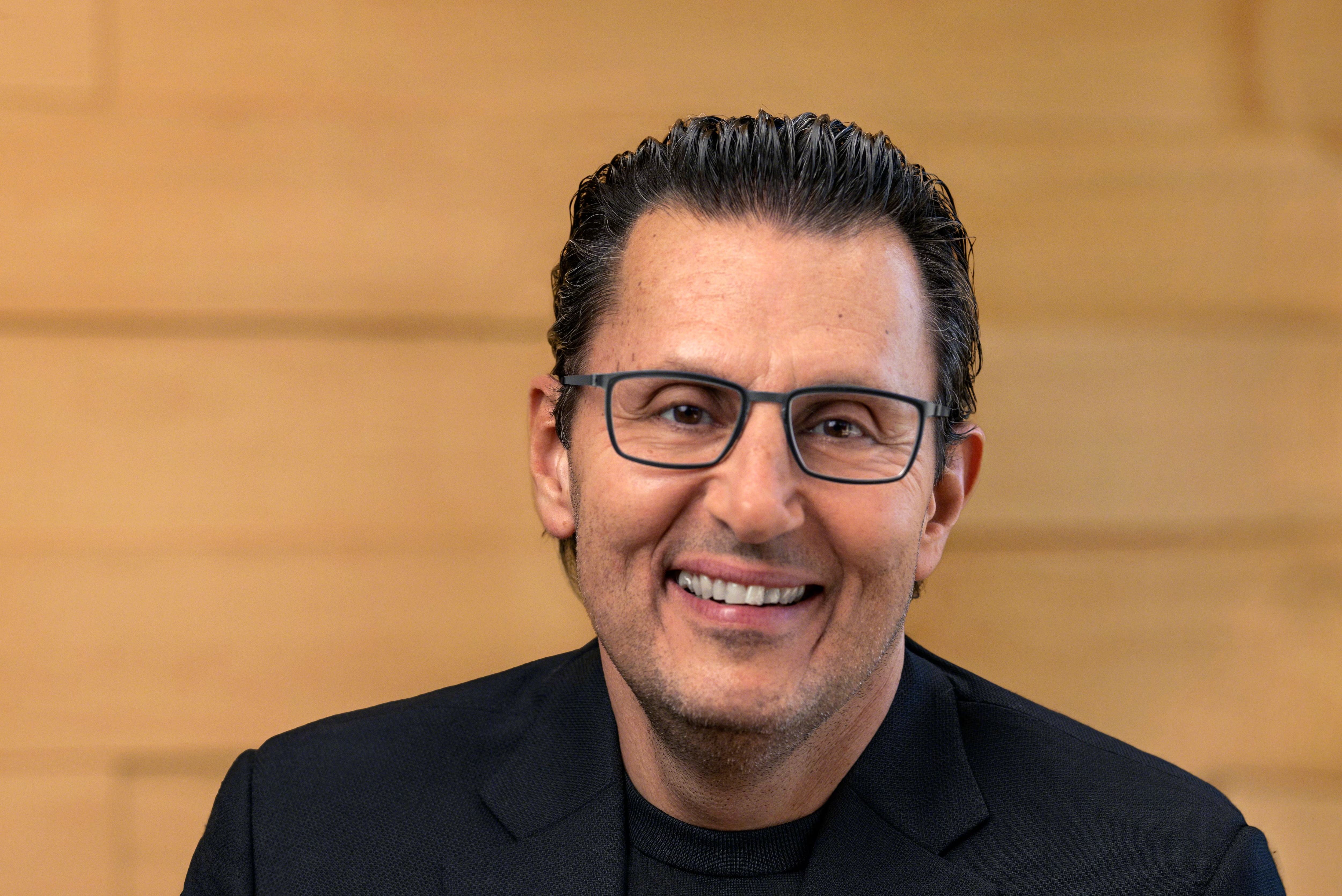
Jamie Dimon, the leader of JPMorgan Chase, believes that artificial intelligence (AI) will significantly change the way people live and work. He predicts that within the next 30 years, the standard workweek will drop to just three and a half days. While he admits that AI will replace some jobs in the short term, he argues that the technology will eventually lead to better health, longer lives, and more free time for everyone. To succeed in this new world, he advises young workers to focus on human skills like empathy and communication rather than just technical abilities.
Main Impact
The most significant impact of Dimon’s prediction is a total shift in how society views labor and productivity. If AI can handle the heavy lifting of data and routine tasks, humans can focus on more creative and personal pursuits. This change could lead to a future where people have more time for hobbies, family, and physical health. However, this shift also requires a massive change in how businesses operate and how governments support workers who might lose their jobs during the transition.
Key Details
What Happened
In a recent interview and his annual letter to shareholders, Jamie Dimon shared a hopeful vision for the future of technology. He explained that AI is already making the world more productive. He believes that as AI becomes more advanced, it will solve major problems like curing certain types of cancer and preventing accidents. While many people fear that AI will take away their livelihoods, Dimon sees it as a tool that will eventually reduce the number of hours people need to work to maintain a good life.
Important Numbers and Facts
JPMorgan Chase is a massive financial institution valued at approximately $794.5 billion. Dimon’s prediction focuses on a 30-year timeline, suggesting that the children of today’s workers will be the ones to enjoy the 3.5-day workweek. He also noted that while some roles will disappear, new fields like cybersecurity and AI management will create many new job opportunities. He emphasized that the transition must be handled carefully to avoid social problems, suggesting that companies might even need to limit layoffs to keep society stable.
Background and Context
For the past few years, many office workers have worried that AI will make their jobs obsolete. This fear is especially strong among "white-collar" workers who perform tasks that involve writing, coding, or data analysis. Dimon acknowledges these fears but points out that technology has always changed the job market. In the past, new inventions often caused temporary job losses but led to more wealth and better living conditions in the long run. He believes AI is the next step in this historical pattern, but he warns that it is moving faster than previous technologies.
Public or Industry Reaction
Dimon’s comments have sparked a conversation about the responsibility of big corporations. He has been vocal about the need for a plan to help workers who are displaced by technology. At major global meetings, such as the World Economic Forum, he has proposed that businesses and governments work together on retraining programs. He warned that if millions of people lose high-paying jobs too quickly without a safety net, it could lead to "civil unrest." His willingness to support government-led restrictions on layoffs shows that even top bankers are concerned about the social impact of rapid automation.
What This Means Going Forward
For young people entering the workforce, the strategy for success is changing. Dimon suggests that "EQ," or emotional intelligence, will be more valuable than ever. This includes the ability to talk to people, build trust, and show genuine heart in your work. While technical skills are still useful, they can often be copied by AI. Human traits like curiosity, a strong work ethic, and the ability to work well in a team cannot be easily replaced. Moving forward, education and career training will likely focus more on these "soft skills" to help workers stay relevant.
Final Take
The rise of AI does not have to be a dark story for the workforce. If leaders like Jamie Dimon are correct, the technology could give us back our time and improve our health. The challenge lies in the next few decades, as we figure out how to move from a five-day workweek to a shorter one without leaving millions of people behind. Success will depend on how well we balance the power of machines with the unique strengths of being human.
Frequently Asked Questions
What is EQ and why does Jamie Dimon think it is important?
EQ stands for emotional intelligence. It refers to how well a person can understand and manage emotions, communicate with others, and build trust. Dimon believes these human skills are vital because AI cannot easily replicate them, making people with high EQ more valuable in the future job market.
Will AI really reduce the workweek to 3.5 days?
Dimon predicts this will happen in about 30 years. He believes the massive increase in productivity caused by AI will allow society to produce more in less time, eventually making the standard 40-hour workweek unnecessary for the next generation.
What should happen to workers who lose their jobs to AI?
Dimon suggests that governments and businesses should provide retraining, relocation help, and financial assistance. He believes that technology should be introduced gradually to give the workforce time to adapt and to prevent social instability.