

Summary
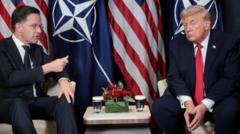
Donald Trump has recently voiced strong criticism toward NATO member countries regarding their lack of cooperation with United States goals in Iran. He expressed frustration that while the U.S. provides significant military and financial support to the alliance, other members are not helping with American security priorities in the Middle East. These comments have renewed fears about the future of the alliance and whether the U.S. will remain a committed member. This tension highlights a growing gap between how Washington and its European allies view global threats.
Main Impact
The primary impact of these statements is a rise in political uncertainty across Europe and North America. NATO relies on the idea that all members will stand together during a crisis. When the leader of the most powerful member suggests that support is conditional, it weakens the trust that holds the group together. If the U.S. decides to reduce its involvement, European nations would have to spend billions more on their own defense very quickly. This situation also signals to other countries that the Western alliance may be divided, which could change how they handle international disputes.
Key Details
What Happened
During a series of public statements, Donald Trump pointed out that NATO allies have not been supportive enough of U.S. efforts to manage the situation in Iran. The U.S. has long sought to limit Iran’s nuclear program and its influence in the Middle East through sanctions and political pressure. Trump argued that since the U.S. protects Europe through NATO, European countries should align their foreign policies more closely with American interests. He suggested that the current relationship is one-sided and unfair to American taxpayers.
Important Numbers and Facts
NATO currently consists of 32 member countries. The alliance has a long-standing agreement that every member should spend at least 2% of its Gross Domestic Product (GDP) on defense. However, many members have struggled to meet this goal for years. The United States spends more on defense than all other NATO members combined, contributing roughly 3.5% of its GDP. In terms of the Iran issue, the U.S. withdrew from a major nuclear deal in 2018, while many European allies tried to keep the agreement alive. This created a clear split in how the two sides of the Atlantic handle Middle Eastern security.
Background and Context
NATO, which stands for the North Atlantic Treaty Organization, was created after World War II. Its main goal was to prevent conflict and protect Western nations from the Soviet Union. The core rule of NATO is Article 5, which says that an attack on one member is an attack on all. For decades, this has kept the peace in Europe. However, the world has changed since the Cold War ended. The U.S. now sees threats coming from many different places, including the Middle East and Asia. While the U.S. wants NATO to help with these global issues, many European countries believe the alliance should focus strictly on defending European borders. This difference in vision is the root of the current disagreement.
Public or Industry Reaction
The reaction to these comments has been mixed. Some political leaders in the U.S. agree that allies should do more to help with global security. They argue that the U.S. cannot be expected to carry the full burden of international safety alone. On the other hand, many European leaders have expressed concern. They worry that linking NATO support to specific U.S. goals in Iran changes the nature of the alliance. Defense experts have noted that if the U.S. appears ready to leave, it might encourage rival nations to take more risks. Within the U.S. Congress, lawmakers recently passed a law that makes it harder for any president to leave NATO without approval, showing that many officials still value the partnership.
What This Means Going Forward
Moving forward, the relationship between the U.S. and its allies will likely face more pressure. If the U.S. continues to demand support for its Iran policy as a condition for NATO membership, it could lead to a standoff. European nations may try to build their own independent military forces to rely less on Washington. There is also the risk that the alliance could become "hollowed out." This means that even if the U.S. stays in NATO, it might not send troops or equipment during a crisis if it feels the other members are not being helpful. The next few years will be a test of whether the alliance can adapt to new global problems or if it will slowly fall apart.
Final Take
The disagreement over Iran is more than just a small argument; it is a sign of a changing world. NATO was built for a different time, and now its members must decide if they can still agree on what "security" means. While the alliance has survived many challenges before, the demand for total political alignment on every global issue is a new and difficult hurdle. The strength of the partnership now depends on whether members can find a way to balance their own national interests with the needs of the group.
Frequently Asked Questions
Can the U.S. president leave NATO alone?
It is now very difficult for a president to do this. New laws in the U.S. require the Senate to approve any move to leave the alliance. However, a president can still choose to move troops or reduce funding without leaving officially.
Why is Iran a problem for NATO?
NATO usually focuses on Europe, but the U.S. sees Iran as a major threat to global stability. The U.S. wants its allies to help with sanctions and pressure, but many European countries prefer to use diplomacy instead.
What is the 2% rule?
This is a target for NATO members to spend 2% of their economic wealth on their military. It is a major point of frustration for the U.S. because many countries have not reached this goal, leading to claims that the U.S. pays too much.